
Milk is one of the most perishable foods there is. It leaves the animal at around 35–37°C, which is the ideal temperature for bacteria to multiply. For dairy farmers and collection centres, every hour without cooling means lower quality, lost income, and rejected batches. That is why a BMC milk machine has become a must-have across India’s dairy sector.
What Is a BMC Milk Machine?
A BMC milk machine, short for bulk milk cooler, is a refrigeration system that chills freshly milked milk quickly and holds it at a safe temperature until it is collected or processed. You may also hear it called a milk cooling machine or a bulk milk chiller. The names differ, but the purpose is the same: stop bacterial growth early and preserve freshness. Most units include an insulated stainless steel tank, a compressor-based cooling unit, and an agitator that keeps the milk moving so it cools evenly.
How a BMC Milk Machine Protects Milk Quality
Bacteria are the biggest threat to fresh milk. Dairy guidelines generally recommend cooling milk to around 4°C within two to three hours of milking. A bulk milk cooler does this reliably.
Slows Bacterial Growth
At 4°C, bacterial activity drops sharply. Lower bacterial counts mean the milk keeps its natural taste, aroma, and nutritional value for longer.
Prevents Souring and Spoilage
Without quick chilling, lactic acid builds up and milk turns sour, especially during hot Indian summers. A BMC machine prevents this, so the milk reaches the dairy in the same condition it left the farm.
Improves Milk Grading and Price
Dairies pay better rates for milk with low bacterial counts and stable quality. Consistent cooling reduces the risk of rejection at the collection point and helps farmers earn more from every litre.
How Cooling Extends Shelf Life
Shelf life depends on how quickly milk is cooled after milking. Properly chilled milk stays fresh longer, which gives dairies far more flexibility in transport and processing. Farmers no longer need to rush milk to the plant twice a day. Collection centres can pool milk from many farmers, hold it safely, and dispatch it on a planned schedule. The result is less spoilage, fewer losses, and smoother operations.
Key Benefits of a Bulk Milk Cooler
- Consistent quality: Every batch is chilled to the same safe temperature.
- Less wastage: Fewer spoiled or rejected batches protect your income.
- Better hygiene: Stainless steel tanks are easy to clean and sanitise.
- Labour savings: Automatic cooling and agitation reduce manual handling.
- Scalability: Capacities range from small farm units to large collection centre systems.
For Any Query, Please Fill Out the Form Below
What to Check Before Buying a Milk Cooling Machine
Choosing the right bulk milk chiller is about more than size. Consider these factors:
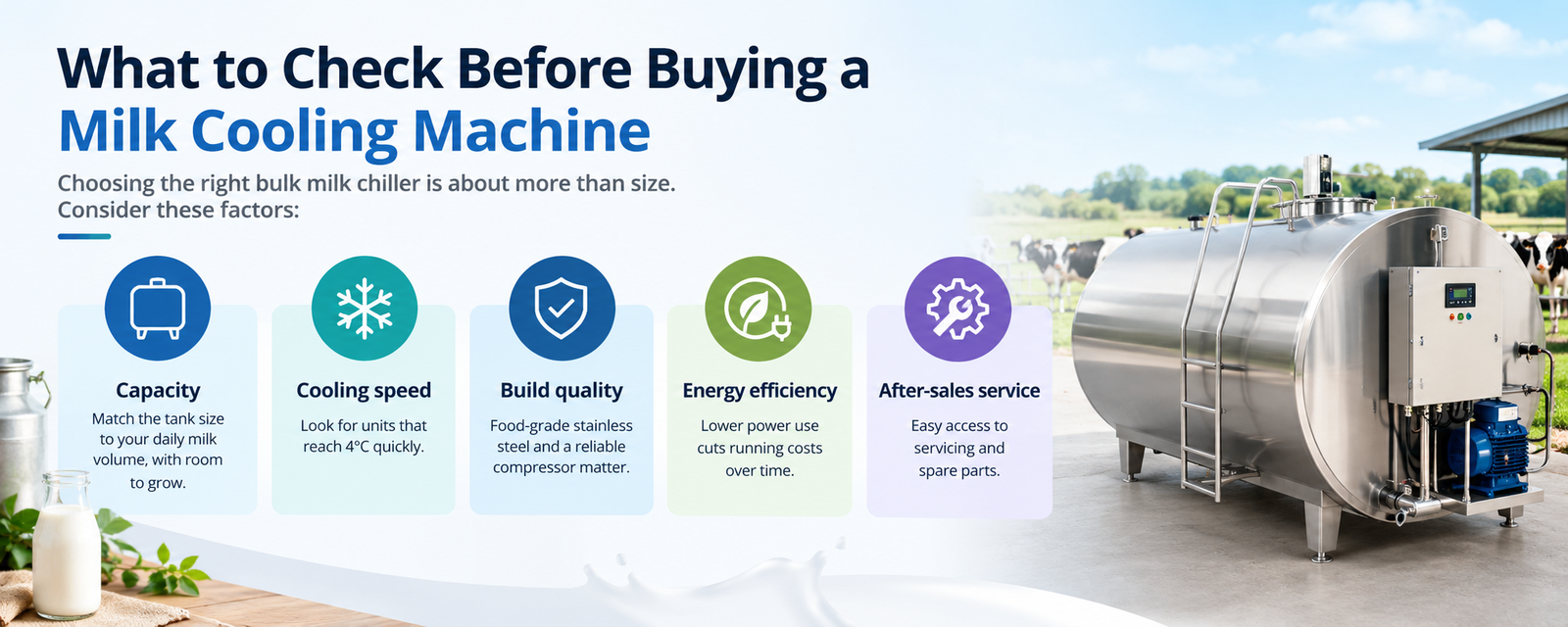
- Capacity: Match the tank size to your daily milk volume, with room to grow.
- Cooling speed: Look for units that reach 4°C quickly.
- Build quality: Food-grade stainless steel and a reliable compressor matter.
- Energy efficiency: Lower power use cuts running costs over time.
- After-sales service: Easy access to servicing and spare parts.
Understanding BMC Machine Price
BMC machine price varies with capacity, cooling type, compressor quality, and added features such as digital temperature control. Rather than choosing the cheapest option, compare long-term value, including energy use, durability, and service support. A well-built machine pays for itself through reduced spoilage and better milk rates.
Simple Maintenance Tips
Clean the tank and outlet thoroughly after every collection, check the agitator and thermostat regularly, and schedule routine compressor servicing. Good upkeep keeps your BMC machine efficient and your milk safe.
Buy Your BMC Machine from Chadha Sales
If you are looking for a dependable BMC machine, Chadha Sales is a trusted dealer in BMC machines for dairy farmers, milk collection centres, and dairy businesses. Whether you need a compact bulk milk cooler for a small farm or a high-capacity milk cooling machine for a collection centre, the Chadha Sales team can help you choose the right capacity and share current BMC machine price details based on your requirements.
Final Thoughts
A BMC milk machine is no longer a luxury. It is a basic investment in milk quality, longer shelf life, and steady income. By chilling milk quickly and holding it at a safe temperature, a bulk milk cooler protects every litre you produce. Contact Chadha Sales today to find the right BMC machine for your dairy and protect your milk quality from the first milking.