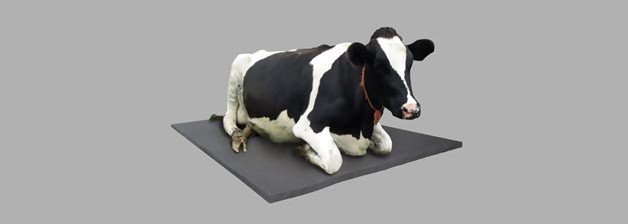
Should I buy cow mats for my dairy farm?
An Indian Dairy Perspective
Cow mats are a very important feature of a dairy. They are essential to your animal’s well-being and productivity. Chadha Sales recommends small and large dairies to cover their flooring with high-quality cow mats. This is an ethical choice for their livestock as well as an intelligent decision for your business and productivity needs. But how do they cater to your needs? Let’s delve into the details.
WARM JACKET
Cow mats essentially work as snuggly jackets for your animals during the winter season (or the whole year depending on where you live). Heat emitted from a cow is retained within these mats just like a warm winter’s jacket!
Essentially, these mats are non-conductive and help in heat retention. They maintain the cow’s body temperature and keep them warm during harsh weather. Ultimately, they ensure that your animals are comfortable enough to carry on their life functions properly such as reproduction and caring for their young.
A HOME NOT HOUSE
It is important for those managing a dairy to ensure that the cows are completely comfortable in their stable. Like the quote, “make a house a home” you should strive to make your animals completely comfortable for maximum productivity in your dairies. Just like you would not like to sleep on a concrete floor, your cows would also not! Cow mats will provide a much more comfortable surface for the cows to lie down and rest. They will better mimic the natural habitat of the animals than a concrete floor. Cows need to lie down for at least 12 hours for maximum blood circulation and in turn, they can produce higher milk.
LESS CHANCE OF DISEASE
On a mat cows will be more comfortable lying down, having a soft surface underneath will also increase their rest time. When cows are lying down, they can rest their hooves and allow them to dry off. This will decrease the risk of diseases. Diseases like arthritis can disable cows and decrease their productivity. Cow mats will protect a cow’s joints and reduce abrasion on your cow’s feet. You will see visible differences after using these cow mats as cases of foot diseases and injuries will decrease and the productivity of their livestock will increase.
WARNING: DON’T SLIP!
It is important for those managing a dairy to ensure that the cows are completely comfortable in their stable. Like the quote, “make a house a home” you should strive to make your animals completely comfortable for maximum productivity in your dairies. Just like you would not like to sleep on a concrete floor, your cows would also not! Cow mats will provide a much more comfortable surface for the cows to lie down and rest. They will better mimic the natural habitat of the animals than a concrete floor. Cows need to lie down for at least 12 hours for maximum blood circulation and in turn, they can produce higher milk.
A CLEAN SLATE
Cow mats are extremely hygienic. They are easier to clean and easier to dry. They dry much quicker than concrete. Unlike concrete floors, they do not absorb animal urine and prevent the growth of dangerous bacteria. They usually have channels that redirect urine from the surface. If the urine is absorbed by the concrete floor your dairy can quickly become a breeding ground for bacteria, and if the urine is evaporated it can cause your livestock to breathe in these dangerous fumes. This is why installing these easy to remove and non-skid surfaces is the best way to ensure that your dairy does not become dirty and unhygienic.
RESPONSIBLE SPENDING
Cow mats provide warmth to your livestock and decrease your spending on their feed as they are able to better regulate their body temperatures. They decrease injuries and save your money on health bills. Most importantly, such mats are made from recycled materials and are environmentally-safe. Made from old tires, they do not tax the environment and are very durable. Due to the material they are made of, they can handle the heavy weight of cattle and will stay with dairy owners for a long time. A long-term investment, cow mats are good for both your livestock and the environment.
For more information on cow mats, please call +91-7864006400









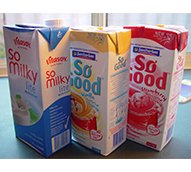
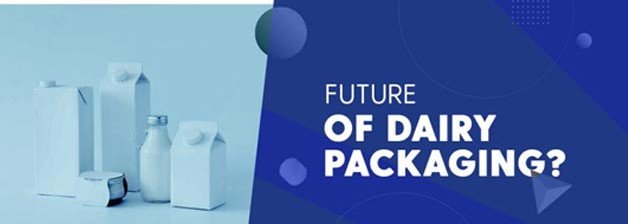

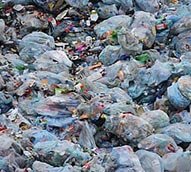


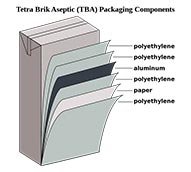 To understand Tetra PAK we should know it is made up of 14% of plastic sheets 6% bio plastic cap, if the Tetra carton is with a cap, 75% is the cardboard and 5% aluminium is used to make a Tetra Pak. Once the Tetra Pak cartons go to the recycling facility they are broken into their base material which is 75% is cardboard paper which is technically they are able to separate from the Tetra PAK and then it is recycled into paper products. Only the cardboard portion is recycled into paper product the other layer which is a combination of aluminium and plastic mixture which is called poly aluminium, are bound together must be down cycled into single used items then it can be recycled so this poly aluminium is now down cycled into single used items which is used for landfill like floor mats, hard plastic items, flooring, plastic panels etc. Normally, we hold the product to see if it is recyclable or not that is not important. The important thing is the product which is in our hands. If it is made from recycled material then it will be good for the environment as Tetra Pak currently does not use recycled paper for the manufacturing of their packaging material. They used virgin plants / trees / cellulose for the creation of their new carton.
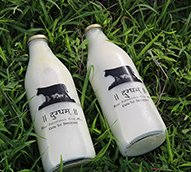
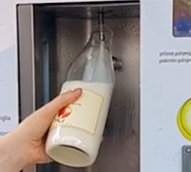
 Especially when we talk about consuming milk in a glass bottle it is far safer than the plastic pouches because the plastic comes with the risk which includes chemical pitching this means that the chemical will leak into the milk and pose a health risk. There are a lot of studies which are into the directions that because of the plastic use in food it can lead to cancerous diseases. The glass milk bottles do not have any health concerns. These glass bottles are made from natural material such as sand and limestone; this is the only material which FDA classifies as fully safe. Glass bottle is made of 100% natural composition and the glass is chemically innered that meaning it can not be made from any reactive chemicals. The glass bottles of milk are much easier to use in comparison to plastic pouches. It is difficult to handle pore with pouches in comparison to glass milk bottles. Plastic pouches are also nowadays under suspicion of adulteration where it has been seen that people are melting the plastic pouch and inserting water and diluting the milk so their question of reliability in plastic pouches are also there and the glass bottle is completely safe. There are certain disadvantages also of glass milk bottles the foremost and most important is the glass bottle is fragile and it can break down and it is not as flexible as plastic pouches. Once it is broken then it means it is useless and also the milk inside goes waste. Glasses are also susceptible to have sharp edges if it can break it can hurt someone. Glass milk bottles are heavier and take much more space in comparison to plastic pouches where they can be stacked one upon another easily. The other disadvantage of glass bottles could be that the seal of the glass bottle may not be hygienic reusing it again and again will be an expense on the consumer and to the dairy entrepreneur. Further the transparent glass bottle can result in degradation of milk when it is exposed to light for the milk if the material is translucent like the plastic pouches it gives advantage for the safekeeping of milk.